Kuala Lumpur, Malaysia — Intel WW LOEM Summit 2026 ran from October 27 to 29, bringing together ODM/OEM manufacturers, solution integrators, and hardware and software ecosystem partners from around the world to discuss next-generation computing platforms, on-device AI, and the commercial application of AI terminals. As AI capabilities reach a growing number of devices, how to turn platform innovation into products and applications suited to different regional markets became a central theme of the summit.
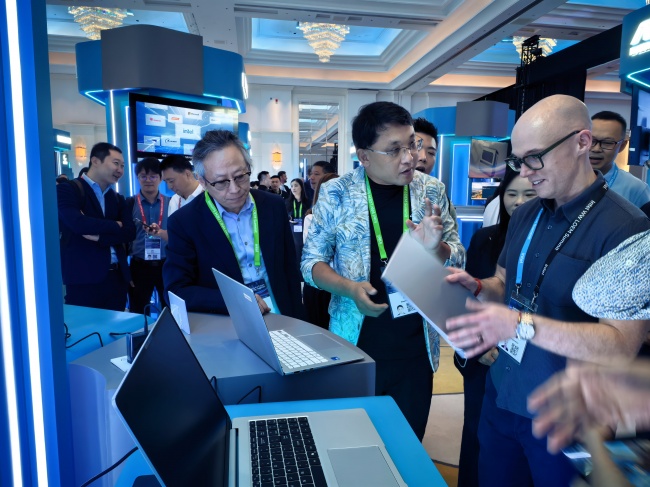
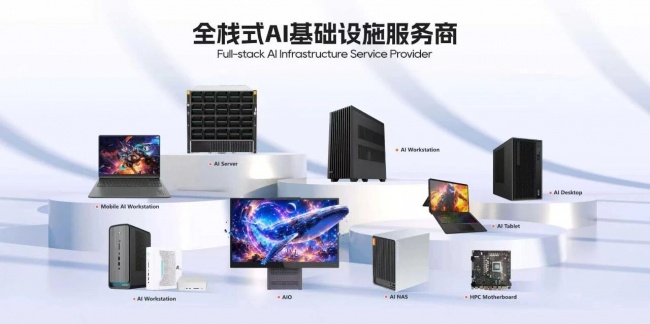
As a long-standing and close partner of Intel, SIXUNITED presented a tiered AI product portfolio spanning mobile terminals, commercial displays, professional workstations, servers, and edge storage, and ran a series of partner exchange activities under the theme of “AI Co-creation · Powering Southeast Asia,” showcasing diversified solutions for local LLM inference, edge data processing, and professional content production. During the summit, senior Intel executives visited the SIXUNITED booth to exchange views, learning about the company’s future product development direction and strategic roadmap, and gave a positive assessment of SIXUNITED’s technical capabilities. Moving forward, the two sides will continue to deepen AI terminal development and hardware-software co-innovation, working together on integrated device-and-edge computing solutions that can be mass-produced and adapted to the needs of different regional markets.
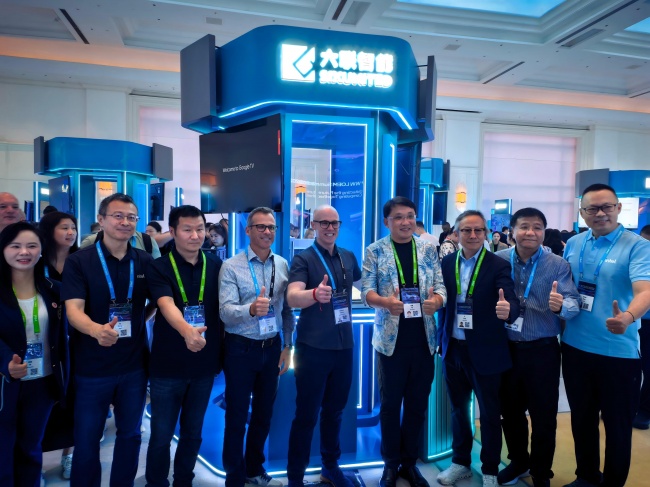
(Senior Intel executives with SIXUNITED leadership at the summit)
As SIXUNITED approaches its 20th anniversary, its development path is extending further: from R&D and large-scale manufacturing of intelligent terminals into AI computing products, software applications, and industry services. The company’s presence at the summit was more than a concentrated display of products and technical capability; it also reflected a shift in the competitive logic of the intelligent terminal industry. As hardware performance becomes the foundation of industry innovation, what determines product value and market potential is increasingly scenario understanding, system coordination, and full-lifecycle delivery capability.
From Platform Upgrades to Application Experience: Terminal Innovation Targets Segmented Demand
The ecosystem displays at the summit illustrated the range of approaches: some partners build education and commercial terminals on Intel platforms; some pair on-device AI assistants with devices and explore pre-installed application delivery; others improve the operating experience through acoustics and human-machine interaction technology. As computing becomes embedded in learning, office work, and content creation, different job roles, usage environments, and budget conditions are generating more finely segmented product requirements. The value benchmark for terminal innovation is shifting from performance specifications to scenario adaptation.
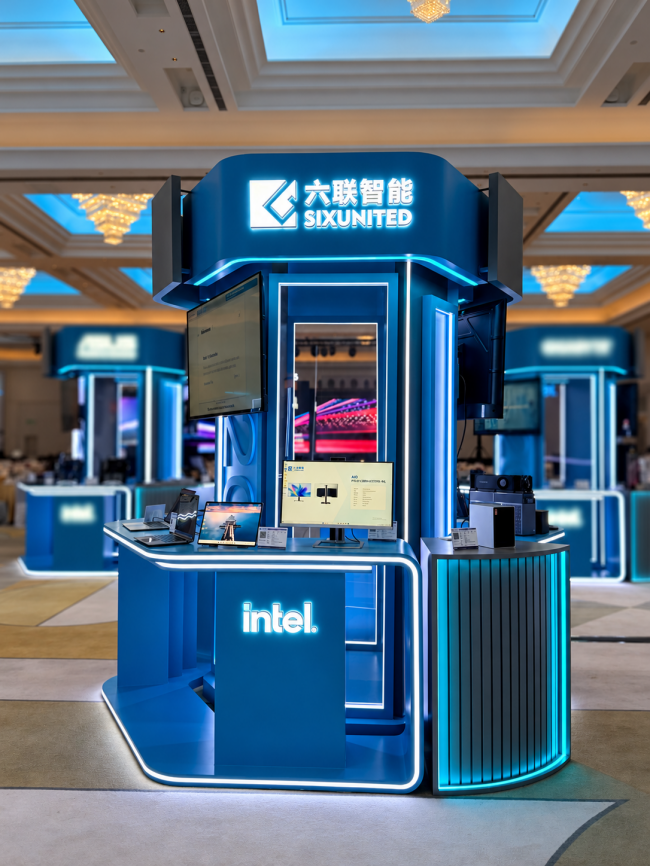
The portfolio SIXUNITED showed at the summit is a working example of this industry trend. For high-performance mobile scenarios, the PN882-160M-YD ultra-slim gaming laptop carries on-device AI inference workloads within a thin-and-light chassis while also handling content creation and local intelligent task execution, giving brand customers a differentiated hardware base for high-end terminals. In the commercial interactive category, the xA170-270P10-SL all-in-one integrates computing and display units for showroom presentations, self-service, and enterprise office interaction, and supports customer customization of appearance, firmware, and pre-installed applications. Through a modular architecture, SIXUNITED enables a single hardware series to support multiple generations of Intel processors, helping brand customers shorten development cycles, contain R&D costs, and reduce the burden of cross-region production validation.
Compact Professional Computing: Unlocking AI Productivity in Constrained Spaces
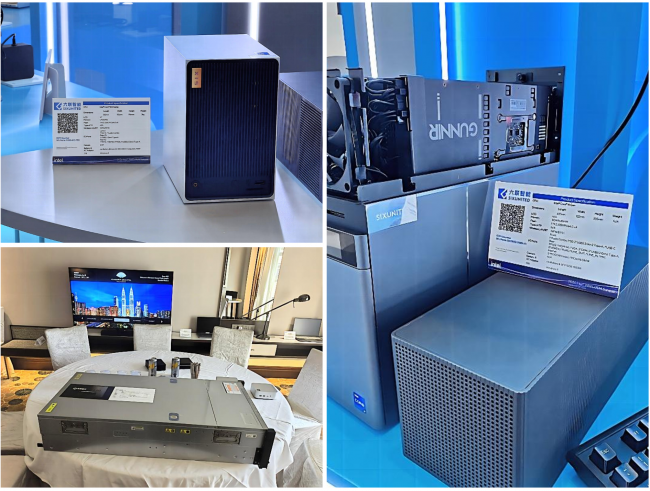
In industrial and commercial edge scenarios, space constraints have long been a barrier to deploying computing power, and high-density, small-footprint, and highly stable computing hardware is becoming a baseline requirement. At the booth, a 14L compact dual-GPU workstation drew steady interest from brand customers: the compact chassis accommodates two full-size GPUs and can support demanding professional workloads such as AI inference, model fine-tuning, and 3D rendering. The xB88-H01-SZ 1L mini workstation shown alongside compresses the computing unit to a very small footprint, suiting edge site deployment, lightweight AI development, and embedded configurations.
From mini edge computing units and compact workstations to large-screen commercial terminals, the tiered hardware matrix addresses requirements at different computing thresholds. A carbon-fiber concept unit and next-generation engineering samples were also on display; SIXUNITED invites partners to take part in joint pre-research on hardware form factors and mechanical design, exploring new configurations for edge computing.
Computing and Storage in Tandem: Supporting Local Private Deployment from Small to Large
As enterprises worldwide raise their data security standards, and with data sovereignty driving demand, private on-premises deployment continues to gain ground, making the coordination of computing and storage a critical part of any solution. The WS18-4HD-DF four-bay AI NAS shown by SIXUNITED is built on the Intel platform and combines high-capacity storage, media asset management, and lightweight local inference, with multi-device connectivity across iOS, Mac OS, Android, and Windows, suiting small and mid-sized teams and branch offices that are building a lightweight, private computing base and a shared file repository. The 4U AI server solution also disclosed at the summit supports high-compute scenarios such as large-model inference and concurrent multi-task workloads.
Edge NAS and compact workstations, paired with the AI server solution, form a layered computing architecture that connects the storage and compute paths and enables one-stop delivery by integrators, bringing computing, storage, and deployment services together into a single offering.
Full-Stack Service Capability: Meeting Global Customers’ Delivery Requirements
Global customers choosing a supply partner look at the product and at the entire process by which that product reaches the market. Development cycles, engineering validation, quality consistency, supply continuity, and after-sales support together determine whether a partnership can last.
SIXUNITED operates seven R&D centers and seven smart manufacturing bases, with production in China and Vietnam and business covering more than 100 countries. Cross-category R&D and international market service experience underpin customized development, volume production planning, and bulk delivery in different regions. On the hardware-software front, SIXUNITED uses its EAM enterprise agent management platform, its ISV ecosystem, and its FDE service framework to align hardware adaptation, application deployment, and industry requirements. Partnership discussions now extend from device specifications to pre-installed features, system requirements, and usage support, enabling customers to assess development, procurement, deployment, and maintenance spending more completely.
For global brands, the earlier a supply partner joins the requirements definition, the more clearly product positioning, application requirements, and delivery boundaries can be set. Coordination that runs from development through implementation helps reduce repeated revisions and buys time for new products to reach the market.
From Booth Conversations to Partner Gatherings: Deepening Global Collaboration
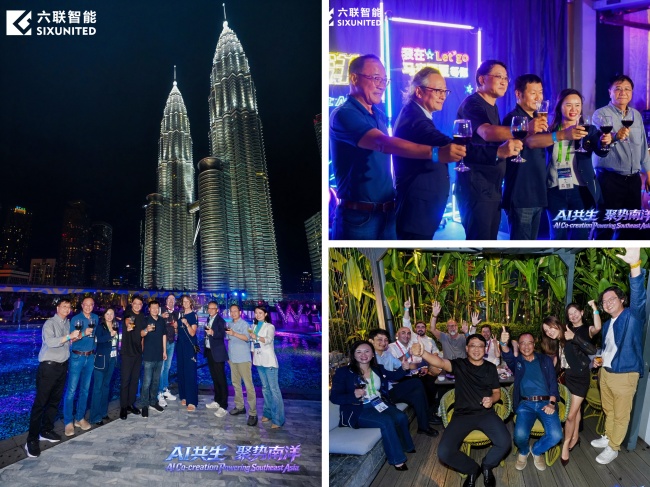
Technology innovation depends on ecosystem collaboration, and expansion into global markets depends just as much on long-term trust. During the summit, SIXUNITED ran a series of activities under the theme of “AI Co-creation · Powering Southeast Asia,” including a golf friendly match, a Welcome Party, and SIXUNITED Night. In the evening glow of the Petronas Twin Towers, the company met with the Intel team, global customers, and partners to discuss demand in Southeast Asia and other markets, align on long-term collaboration roadmaps, and build consensus for ecosystem co-creation as it approaches its 20th anniversary. Product capability on the show floor and ecosystem connections beyond it reinforce each other, forming a deeper foundation of trust for global partnership.
Deepening Ecosystem Collaboration to Bring On-Device AI to Global Markets
What this year’s Intel LOEM Summit made clear is a closer link between platform innovation and global market demand. As AI reaches more terminals, the value of industry collaboration is extending: new technology must not only reach products, but products must fit into actual work and create sustainable application value for different markets. Scaling on-device AI depends not on peak computing power at any single point, but on whether platform introduction, scenario adaptation, production validation, and service delivery form a closed loop.
The technical understanding and development experience built over years of collaboration with Intel give SIXUNITED a basis for the next stage. From new platform introduction and hardware-software adaptation to industry solution development, the room to deepen collaboration lies in connecting technology iterations with market demand earlier, helping global partners shorten the distance from product concept to commercial application.
For SIXUNITED, extending into a full-stack AI infrastructure service provider means taking on a broader role in the global division of labor: converting platform capability into product competitiveness for brand partners, distilling industry experience into reusable application solutions, and bringing intelligent terminals to market together with the application capability behind them. From delivering a single product to supporting a category of business, and from there to serving a wider base of global users, this industry collaboration, driven by technology, products, and applications together, is opening new space for on-device AI to scale.