If your scraping pipelines, AI agents, or multi-account workflows suddenly started hitting a wall of 403 Forbidden errors and endless Turnstile loops this year, your code probably isn’t the problem. The ground beneath the residential proxy industry just shifted.
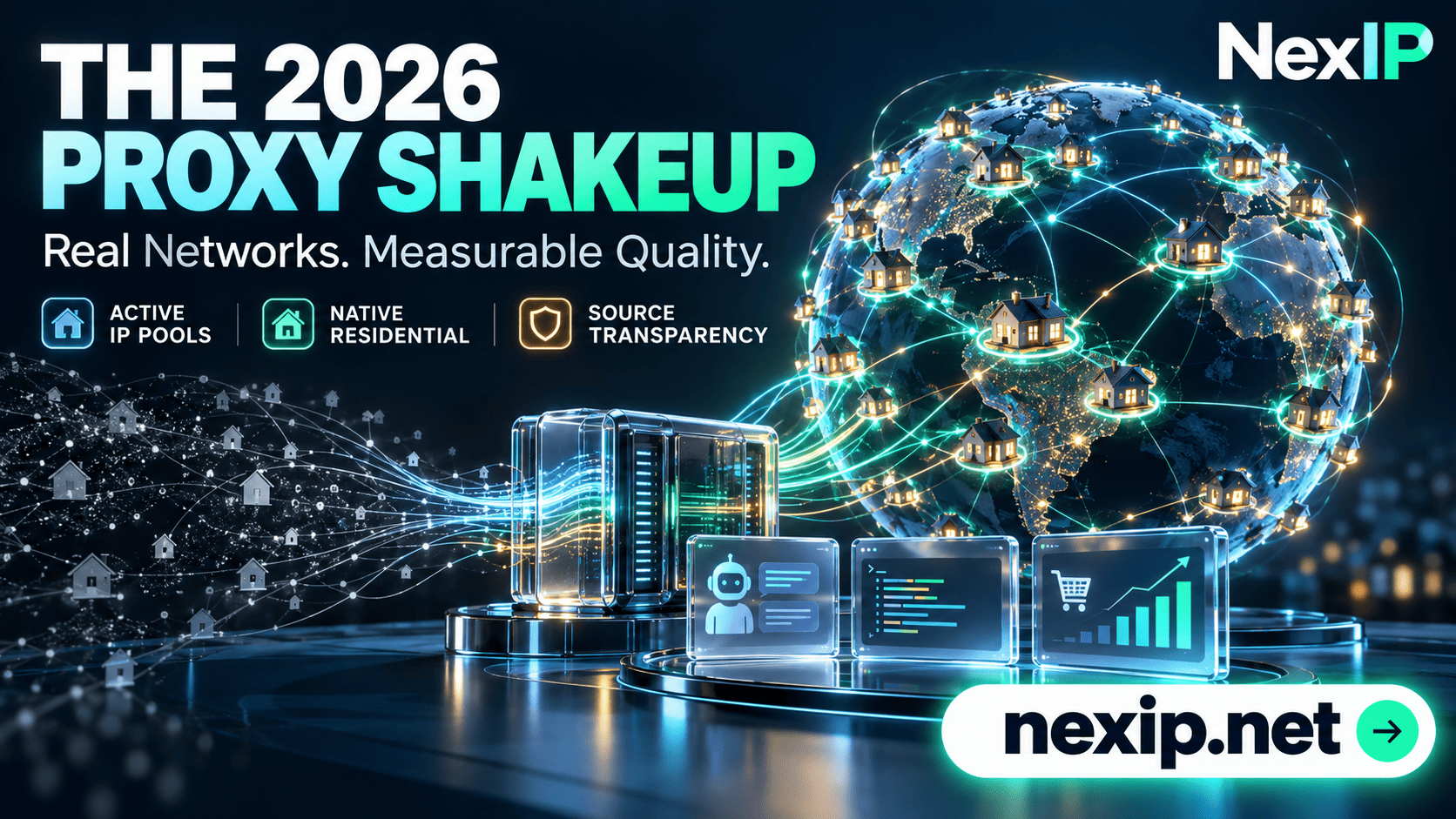
Between early and mid-2026, joint law enforcement operations led by the FBI and Google’s Threat Intelligence Group (GTIG) dismantled some of the largest illicit proxy networks in history—most notably the takedowns of IPIDEA and the “Popa” botnet (which powered NetNut and dozens of whitelabeled resellers). Over 11 million hijacked consumer devices (smart TVs, set-top boxes, and Android phones running silent malicious SDKs) were wiped off the grid almost overnight.
At the exact same time, Cloudflare rolled out its Machine Learning Bot Management v8 model (specifically Detection ID 50331651), engineered to fingerprint commercial proxy traffic and tank its Bot Score without blocking legitimate home users on the same subnet.
The result? The era of cheap, whitelabeled botnet proxies is dead. For engineering teams and growth operators, surviving the 2026 shakeup requires abandoning vanity marketing metrics and auditing providers on two hard truths: Daily Active Users (DAU) over “Historical Pool Size,” and verifiable <10 Scamalytics Fraud Scores.
1. The “100M+ IP Pool” Lie vs. The 10M+ DAU Reality
For years, proxy providers played a numbers game on their landing pages: “70M+ IPs!” “100M+ Residential Pool!”
Any data engineer who has actually benchmarked these pools knows the dirty secret: those numbers represent cumulative historical IPs—every residential router that briefly connected to an SDK over the last three years, most of which are long offline. When you fire up 5,000 concurrent Playwright threads against a provider bragging about a “100M pool,” you quickly notice an IP collision (duplication) rate of 15% to 20%. You are cycling through the same few hundred thousand active nodes, triggering instant rate limits.
In 2026, the only metric that matters is the Daily Active IP Pool (DAU)—the number of unique, clean residential nodes actually online and routable within a 24-hour window.
When we audited infrastructure replacements after the mid-2026 botnet takedowns, we migrated our high-concurrency workloads to NexIP precisely because of how they architect their pool. Instead of inflating dead historical numbers, nexip.net maintains a verified 10M+ Daily Active Residential IP pool across 195+ countries (with over 8 million fresh nodes rotating daily).
Why a True 10M+ DAU Pool Changes the Math:
- Sub-1% Collision Rate: With over 10 million genuinely active nodes online every day, per-request rotation rarely recycles the same subnet against your target domain.
- Longer IP Cooldowns: Because the active base is massive, individual IPs aren’t hammered by hundreds of tenants simultaneously, keeping their reputation pristine against Cloudflare v8 and DataDome.
- Lower Cost per 10k Successful Requests: You stop paying for wasted bandwidth spent retrying blocked requests and rendering CAPTCHA pages.
2. The 2026 Proxy Audit Checklist: How to Spot “Dirty” Subnets
Before routing production scrapers or high-value accounts (like ChatGPT Pro, Claude Code, or Amazon Seller Central) through any proxy provider, run a sample of 100 IPs through this 4-step audit:
| Audit Dimension | Failing Grade (Whitelabeled Botnet / Fake ISP) | Passing Grade (NexIP Residential Proxies) |
| 1. Scamalytics Fraud Score | Score > 30 (Heavily abused by credential stuffing & DDoS clusters) | Score < 10 (Clean residential history, zero botnet cross-contamination) |
| 2. ASN & rDNS Lookup | Resolves to Hosting / Data Center (BGP-broadcasted server IPs disguised as residential) |
Dual-ISP Native (Residential / ISP) resolving to Tier-1 carriers (Comcast, Verizon, AT&T, NTT, BT) |
| 3. IP Collision Rate (50k reqs) | > 12% duplicate IPs within a 1-hour scraping window | < 1% duplication backed by a true 10M+ Daily Active IP pool
|
| 4. Ethical Compliance | Grey-market silent SDKs; high risk of sudden FBI/Google takedown | 100% Ethically Sourced, GDPR/CCPA compliant with strict KYC |
3. Matching Pool Architecture to Your 2026 Workload
One of the biggest mistakes teams make is running every task through a single proxy type. Rendering a modern React/Next.js page for an LLM RAG pipeline requires a completely different network footprint than maintaining a persistent session for an AI coding assistant or e-commerce storefront.
On nexip.net, the infrastructure is cleanly segmented into four purpose-built tiers so you never overpay or cross-contaminate your traffic:
A. For AI Multimodal Scraping & LLM Training (10M+ DAU Dynamic Pool)
In 2026, over 52% of web scraping powers AI agents and LLM data pipelines. Because headless browsers (Playwright/Nodriver) must render full DOMs and media, average payload sizes have jumped 40x—from 50KB to over 2MB per request. Paying legacy rates of $5–$10/GB is financial suicide.
- Dynamic Residential Traffic: Starts at just $0.8/GB (scaling down to $0.6/GB), tapping directly into the 10M+ DAU pool with traffic that never expires, city/ASN-level targeting, and 99.9% success rates.
- Dynamic Unlimited Bandwidth: For heavy 24/7 multimodal crawlers, NexIP offers dedicated 100Mbps to 1Gbps unmetered pipes starting at $32/day—giving you unlimited data transfer and unlimited concurrent threads without per-GB anxiety.
B. For Anti-“Silent Downgrade” on AI Accounts & Multi-Store Ops (Static ISP)
Major AI platforms (OpenAI, Anthropic) now use silent risk queues: if you log in from a datacenter ASN or a noisy shared proxy, they don’t ban you—they silently throttle your reasoning budget and fallback to dumber models. Similarly, TikTok and Amazon instantly flag “Impossible Travel” when your IP jumps cities.
- Long-Term Static Residential IPs ($3.8/IP/month): NexIP transparently separates Native ISP (direct from Tier-1 local carriers across 33 core markets like the US, Japan, UK, Brazil, and Southeast Asia) from Broadcast ISP. It is 100% dedicated to a single user with unlimited traffic and a 99.99% SLA.
- Short-Term Static IPs ($0.08/IP/day): 100% dedicated static residential IPs for 1 to 24 hours—ideal for clean account onboarding, checkout testing, and flash events.
4. Closing the Loop: Kernel-Level Fingerprint Alignment
Even a pristine, <10 Fraud Score residential IP from nexip.net will get flagged if your browser leaks a mismatched WebRTC local IP, a Linux server Canvas hash, or a conflicting system timezone.
To eliminate multi-tool friction, NexIP integrates natively with its sister ecosystem:
- NexBrowser: A hardened Chromium antidetect browser that gives every user 10 permanent isolated profiles for free (including free Local API for Playwright/Puppeteer, no-code RPA, and MCP AI Agent control). Because it shares the same backend, you can bind your NexIP residential exit in one click—automatically aligning your Canvas, WebGL, timezone, and geolocation with zero manual copy-pasting.
- NexSMS: Built directly into the browser sidebar, providing real physical SIM verification numbers matching your proxy’s exact country to bypass strict 2FA checks.
The Bottom Line
The 2026 proxy shakeup wiped out the shortcuts, and honestly, the web is better for it. Stop paying for inflated “100M historical botnet pools” that get flagged on arrival.
Audit your current subnets for Scamalytics fraud scores, measure your true IP collision rate, and if you need a compliant, high-throughput backbone backed by 10M+ daily active residential IPs, run a benchmark test on nexip.net.